
Andrey Movchan: why Britain's economy stalls
In a dimly lit hall in West London, the Global Talent Club welcomed Andrey Movchan — a veteran of global finance, founder of Movchan’s Group, and former head of asset management divisions overseeing over $7 billion in capital. Now a resident of London, Movchan offered a lucid and unsparing account of the UK’s economic position, the myth of AI-led revolutions, and the perils of speculative investing.
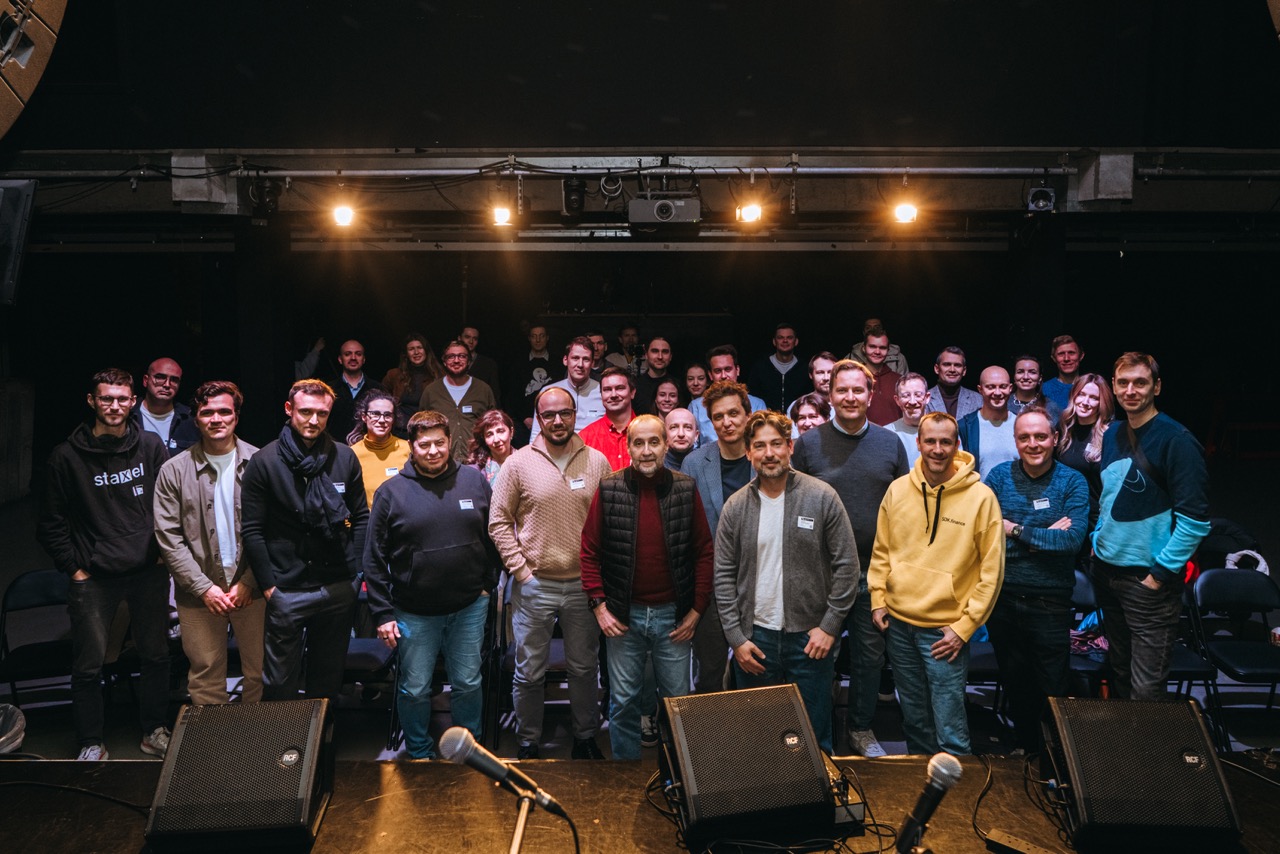
Photo: Svetlana Chekhlataya
The event, attended by a full house of Global Talent visa holders — founders, technologists, and senior executives — opened with Movchan’s self-deprecating remark: “It’s nice to feel you’re here — the hall is dark, so I can’t see you, but I sense you.”
The UK’s Invisible Economic Strategy
Movchan dissected the UK’s economic trajectory with surgical precision. “Britain has lost its model of economic behaviour,” he said. Once a global financial hub, a trade empire, and an innovation leader, the UK now struggles with identity. “It’s caught between models — it’s no longer industrial, nor truly financial, nor a global innovation centre. The dream of a post-Brexit global trading power didn’t materialise.”
In his view, public spending is not only high but disastrously inefficient. Institutions like the NHS, he argued, are bloated with administrative overheads, with medical staff making up less than 35% of total headcount. “Most of the people involved are part of procedural loops that don’t contribute to productivity.”
Britain is caught between models — it’s no longer industrial, nor truly financial, nor a global innovation centre. The dream of a post-Brexit global trading power didn’t materialise.
He pointed to the paradox of the UK’s productivity growth: stagnant for over a decade, with the Office for Budget Responsibility forecasting a modest 1% annual rise. “It’s not the fault of technology,” he added. “It’s that fewer people work in productive sectors. Too many are caught in compliance, governance, and regulatory loops.”
On AI, Bubbles, and False Economies
Asked whether artificial intelligence could reignite economic growth, Movchan remained sceptical. “AI is cool. But we’ve seen revolutions before: computers, automated looms, phone exchanges. Jobs didn’t disappear. Nothing fundamental changed. Productivity didn’t jump.”
He also cautioned against blind investment in AI startups, likening the current wave to the dotcom bubble. “Most will vanish. A few giants will remain, and even those may fade. Remember Nokia? Ericsson? Investing in AI is fine — as long as you accept you’re gambling.”
The Art of Conservative Investing
In contrast to the hype, Movchan preaches restraint. “Anything promising more than 10–11% annual return carries unjustified risk. If you want consistent 5–10%, then skill matters. Above that — it’s luck.”
He emphasized that true conservative investing means working within your circle of competence, and not being seduced by promises of alpha. “If someone asks to manage your money, ask them what edge they have. If you can’t find the sucker at the table, it’s probably you.”
He added, almost mischievously, that if one insists on investing in real estate, the best option is often not owning physical property but a well-managed REIT portfolio. “Otherwise, you’re just tying yourself to a roulette wheel labelled 'Property'.”
Britain: The Best of the Worst
So why live in Britain, a country Movchan painted with shades of bureaucratic grey? “Paraphrasing Churchill,” he smiled, “Britain is the worst country in the world — except for all the others.”
He praised the cultural comfort of London, its language, the rationality of daily life. “I love London. I love speaking English. And I like that no one here knows me. It’s peace.”
He added that despite the inefficiencies and political posturing, the UK remains a safe, comprehensible base — for now. “As long as they don’t strangle me with taxes, I’m staying. But the world is wide: Israel, Switzerland, the Netherlands, even Greece — each has its own charm.”
On Cyprus and the Fragility of Assets
As a Cypriot citizen, Movchan spoke fondly of the island’s post-war economic miracle, but warned of geopolitical risks. “Cyprus is surrounded by unstable regimes. It’s sitting on too much gas. And if conflict escalates, real estate becomes rubble.”
He recalled the ghost city of Famagusta, once a prized resort — now a ruin. “You can’t take property with you. One mistake — and everything can vanish.”
Final Thoughts: On Power, Popularity, and Peace
When asked whether his influence declined after leaving Russia, he shrugged: “I never cared for fame. I cared for wealth. And I have that. My clients came with me — many had nowhere else to go. So I live in peace, manage money, and grow my metaphorical cabbage, like Emperor Caracalla in retirement.”
He concluded the conversation with a chilling warning about markets: “What if the feedback loop reverses? Markets fall, people sell, which drives prices lower, which causes more panic. We’ve had years of positive feedback. But that’s not a law of nature.”
Then, with a grin, he added: “As mathematicians say, chaos is always possible.”
This article is based on a live conversation hosted by the Global Talent Club in London.